
During the Eastern Jin Dynasty, although the number of dated tombs increased compared to the Western Jin period, both the variety and quantity of burial objects decreased significantly. Archaeological evidence indicates that burial goods were primarily utilitarian items, mainly comprising seven categories of food and drink containers such as bowls, cups, saucers, eared cups, plates, jars, and pickle jars. Daily necessities included spittoons, tiger-shaped urinals, incense burners, washbasins, bowls, flat-rimmed pots, chicken-head jars, fruit boxes, wine vessels, and lamps, totaling about ten types. Stationery items were limited to just two types: water pots and inkstones. Most tombs yielded relatively few artifacts, with a rather limited variety. For instance, the tomb from the first year of the Xianhe era (326 CE) yielded 53 artifacts, including 31 jars and 14 bowls; the tomb from the seventh year of the Yonghe era (351 CE) yielded 36 artifacts, including 13 plates; and the tomb from the third year of the Yixi era (407 CE) yielded 24 artifacts, including 11 plates. Even in tombs with slightly larger numbers of burial objects, the composition of artifact types remained notably monotonous.
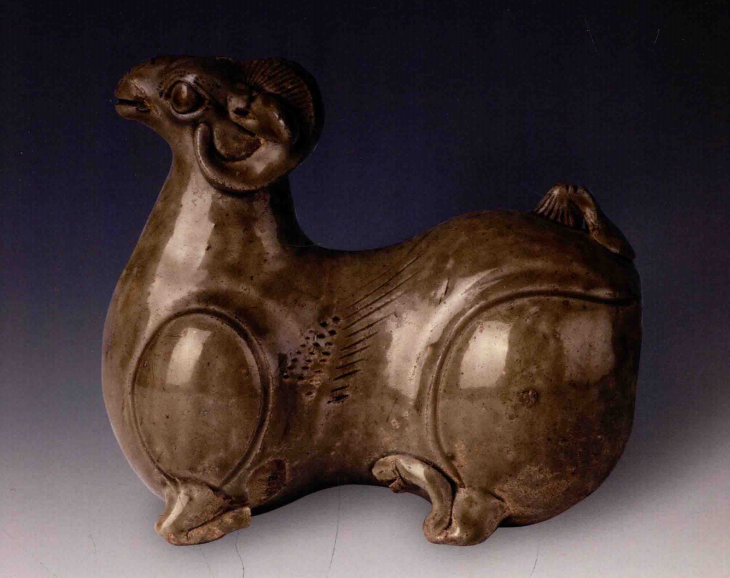
Eastern Jin Dynasty
Yue Kiln Celadon Ram Figurine
Collection of Yuyao Museum
With the Eastern Jin dynasty's relocation southward, societal norms and funeral customs underwent transformation, ushering in a transitional phase for Yue Kiln celadon production. Funerary ware nearly vanished, with product types contracting to everyday utilitarian pieces such as bowls, jars, saucer-necked pots, chicken-head spouted pots, and spittoons. Production centers gradually shifted from Shangyu to the Shanglin Lake area in Cixi.
In terms of decoration, the elaborate and ornate style of the Western Jin period gave way to overall simplicity. Traces of Western Jin motifs like oblique diamond patterns and linked-pearl designs remained visible before the Xiankang era (335 AD), but thereafter, string patterns and brown dot accents became prevalent. These dots were often applied to rims, shoulders, or animal eyes, serving to enliven and accentuate the pieces. Animal-shaped vessels became significantly less common, appearing only in a few categories like candlesticks and water receptacles. Vessel forms generally grew taller and larger, with designs emphasizing practicality and featuring smooth, balanced lines.
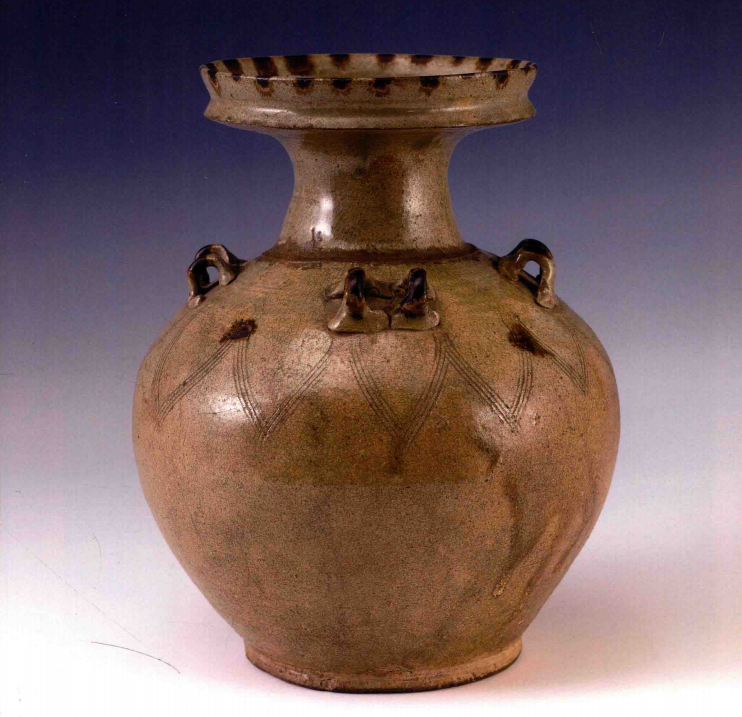
Eastern Jin Dynasty Celadon Vase with Brown-Glazed Incised Petal Design and Four Handles
Shanghai Museum Collection
Meanwhile, the funerary objects common in the Western Jin period—such as molded clay vessels, mortars, sieves, wells, and pigsties—virtually disappeared by the Eastern Jin period, appearing only sporadically in a handful of tombs. This reflects a trend toward simpler burial customs. Among typical artifacts, bowls in the late Eastern Jin period predominantly featured plain surfaces with string-impressed patterns, along with faux ring bases and stacked firing marks. Eared cups were often unearthed paired with plates, serving as precursors to lamp stands. Later bowls commonly displayed dotted decoration around the rim, which gradually gave way to plain surfaces. Among jars, the chicken-head spouted jar and the flat-rimmed jar maintained their forms for extended periods with minimal variation, though late examples featured bridge-shaped handles and dotted decoration.
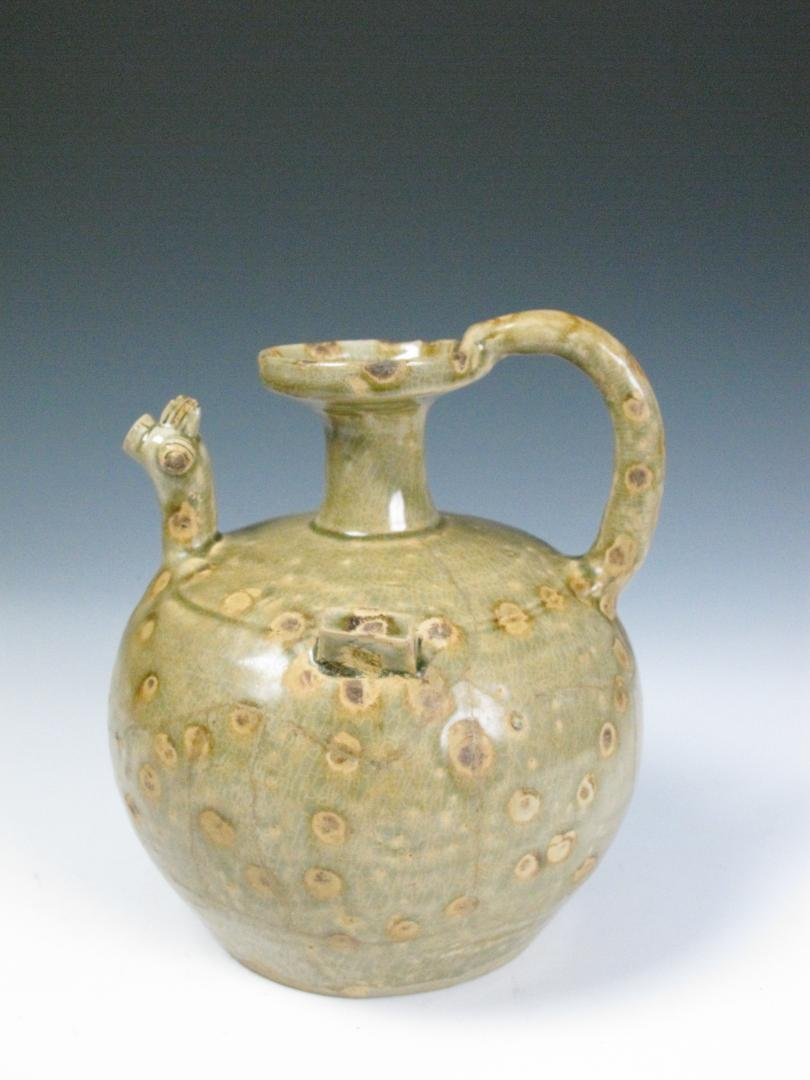
Eastern Jin Dynasty
Ouyao Kiln Brown-Glazed Rooster-Spouted Jar
Collection of Zhejiang Provincial Museum
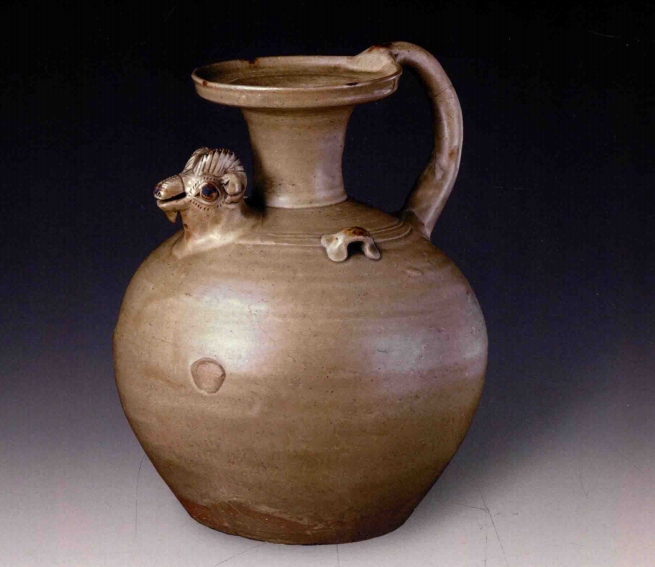
Eastern Jin Dynasty
Yue Kiln Celadon Brown-Glazed Goat-Headed Vase
Collection of the Palace Museum
Overall, Eastern Jin Dynasty Yue kiln celadon underwent significant changes in burial categories, decorative styles, and vessel functions. The reduction in vessel types, simplification of decoration, and near disappearance of funerary replicas reflected a decline in overall craftsmanship compared to the Western Jin Dynasty. This shift mirrored a profound transformation in material culture and burial customs toward practicality and everyday utility amid social upheaval. Although its artistic achievements and production scale fell short of the Western Jin period, the Eastern Jin Yue Kiln successfully completed a crucial transition from symbolic funerary ware to utilitarian daily objects. Its minimalist and practical aesthetic laid the foundation for the development of celadon art in subsequent eras.
The following is the situation regarding dated vessels from the Eastern Jin Dynasty period————
320 AD
Third Year of the Daxing Era
Mengjiatang, Xinchang, Zhejiang
Eastern Jin Dynasty Yue Kiln Celadon Well
320 AD
Third Year of the Daxing Era
Wenda'ao Di, Xinchang, Zhejiang
320 AD
Third Year of the Daxing Era
Mengjiatang, Xinchang, Zhejiang
321 AD
The Fourth Year of the Daxing Era
The Yu Family Residence, Baidu, Fenghua, Zhejiang
Eastern Jin Dynasty Celadon Tiger-Shaped Water Jug
322 AD
Year 1 of the Yongchang Era
Xiaoshan, Zhejiang
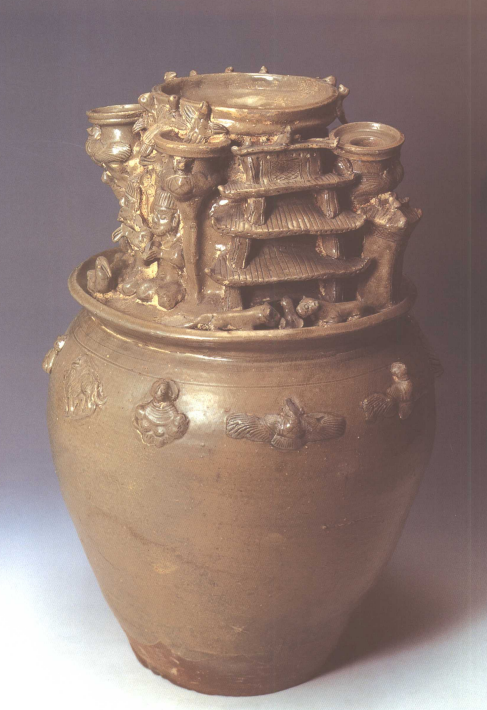
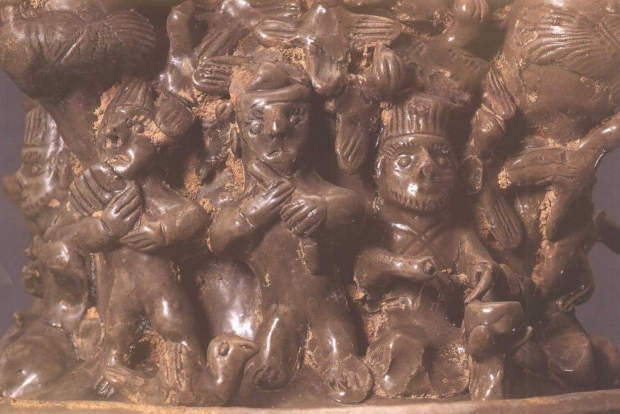
Eastern Jin Dynasty Yue Kiln Celadon Stacked-Relief Vase
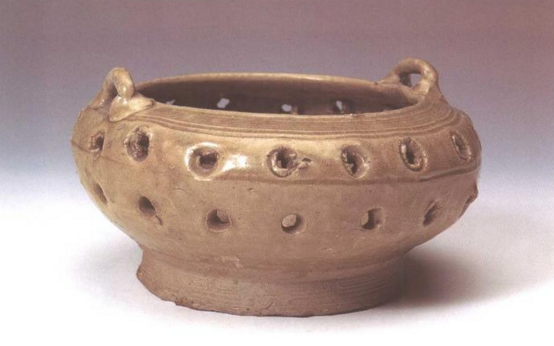
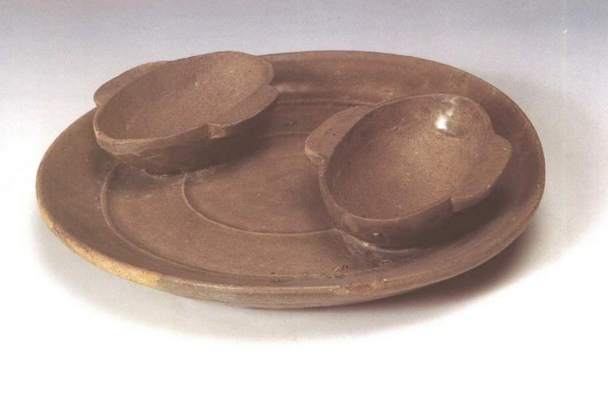
Eastern Jin Dynasty Yue Kiln Celadon Eared Cup and Saucer
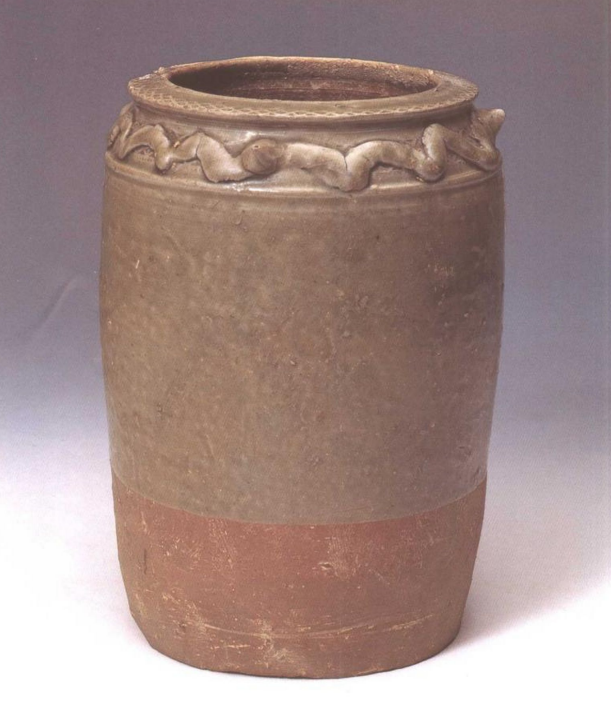
Eastern Jin Dynasty Yue Kiln Celadon Well
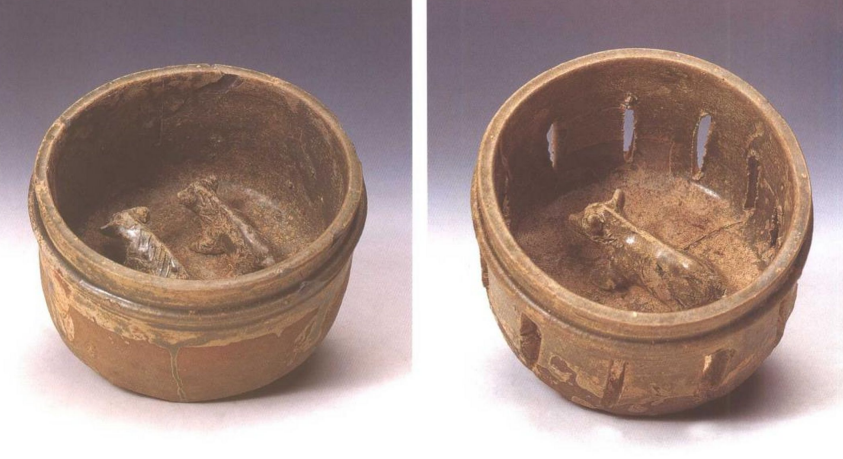
Eastern Jin Dynasty Yue Kiln Celadon Pig Pen
327 AD
Year 2 of the Xianhe Era
Xiuling Reservoir, Huangyan, Zhejiang
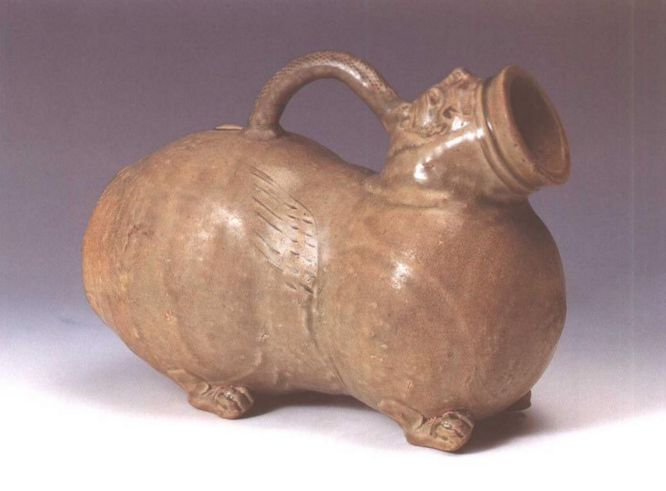
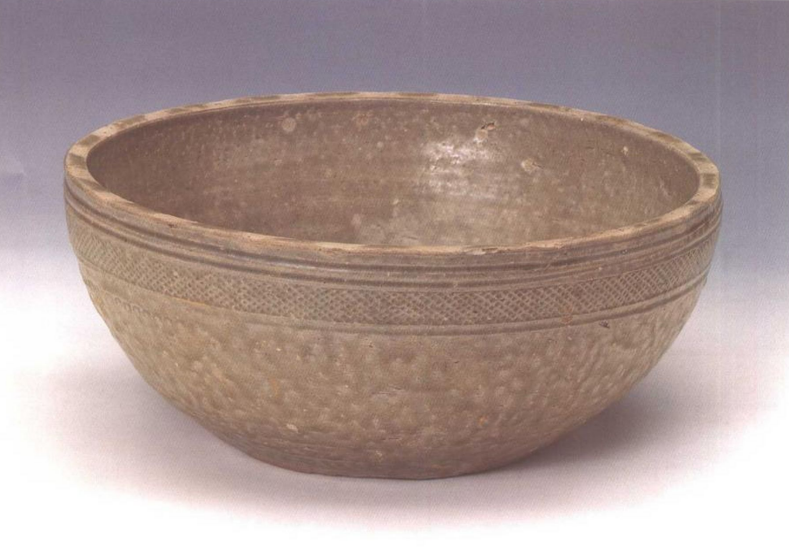
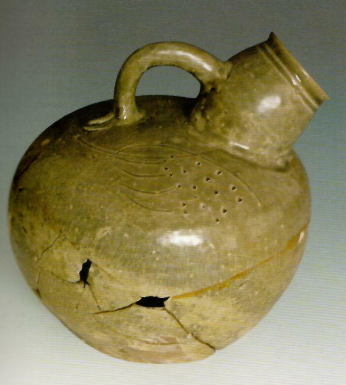
Eastern Jin Dynasty Celadon Tiger-Shaped Water Jug
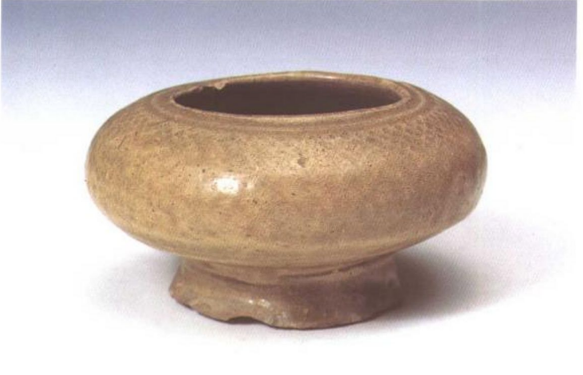
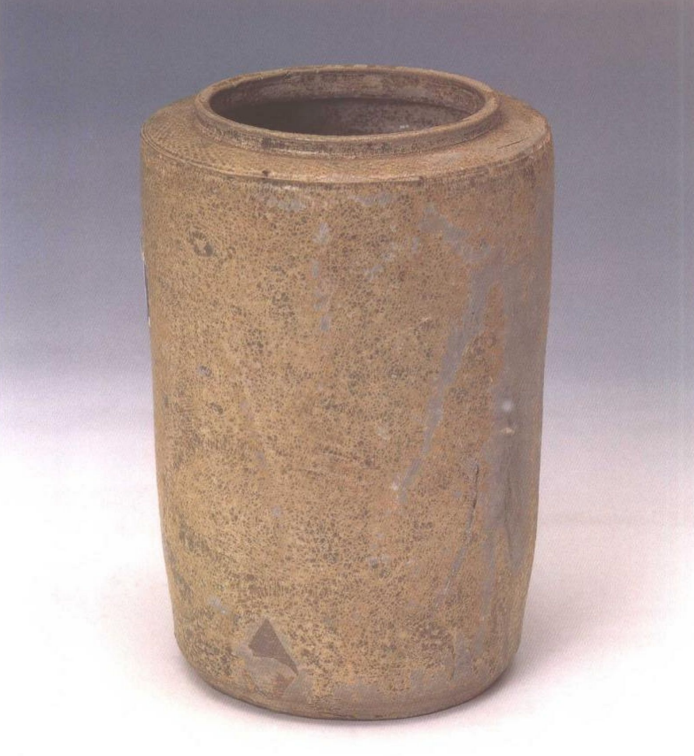
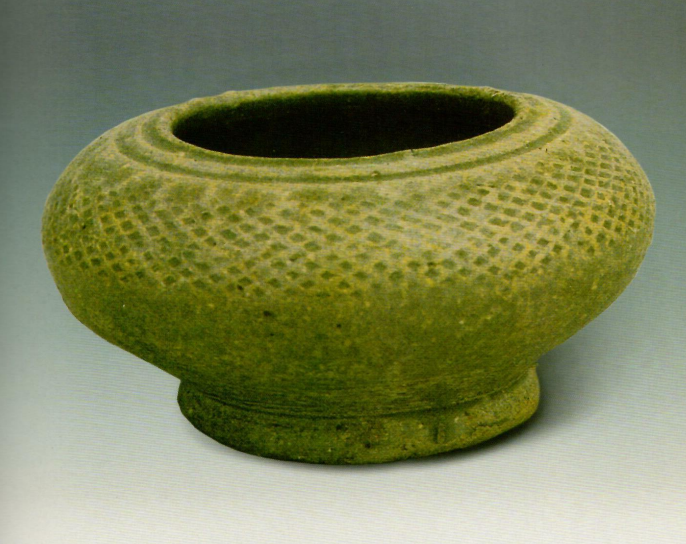
Eastern Jin Dynasty Celadon Water Basin
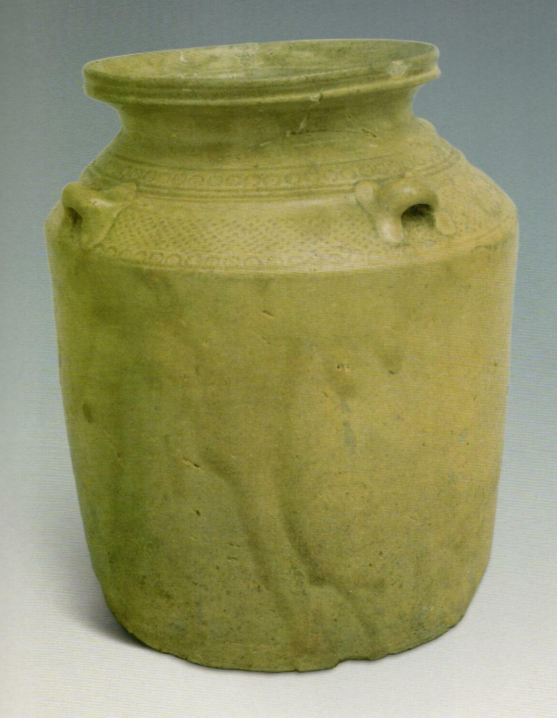
Celadon Vase with Cylindrical Body
329 AD
Year 4 of the Chenghe Era
Xiuling Reservoir, Huangyan, Zhejiang
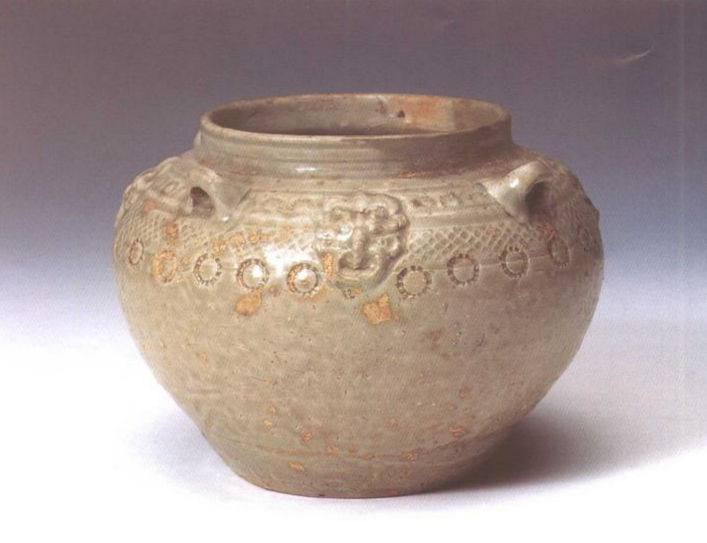
Eastern Jin Dynasty Celadon Jar with Four Handles
341 AD
The Seventh Year of the Xiánkāng Era
Shuangqin, Wenzhou City
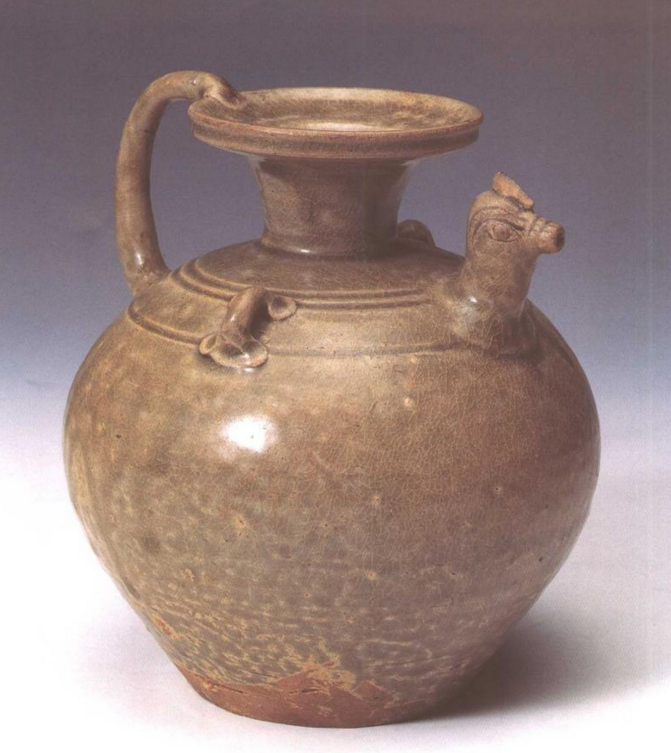
341 AD
The Seventh Year of the Xiánkāng Era
Shuangyu Umbrella Temple, Wenzhou City
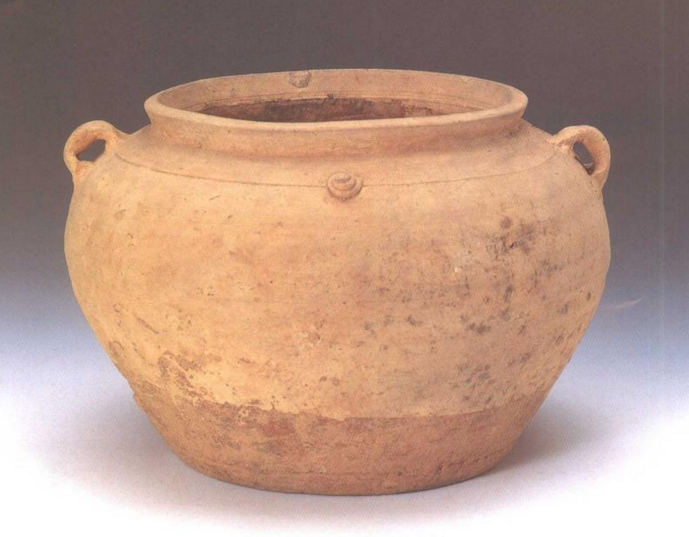
Celadon Double-Handled Jar
342 AD
The eighth year of the Xiankang era
Paitou Town, Zhuji, Zhejiang
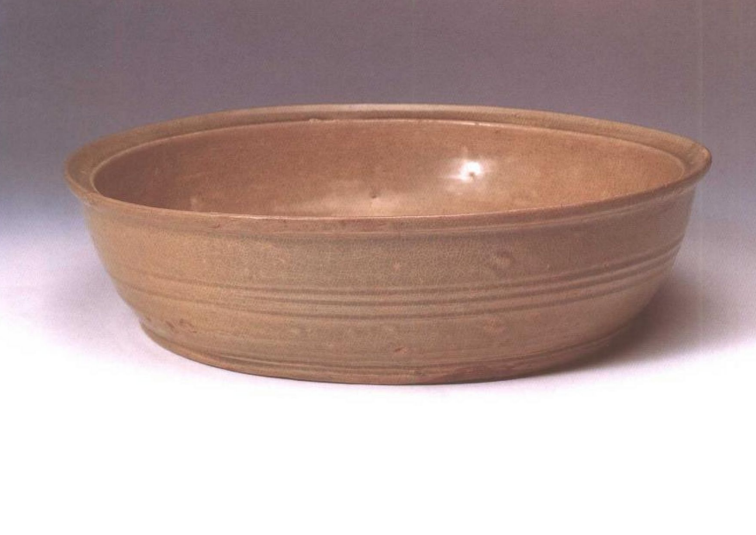
Yue Kiln Celadon Basin
347 AD
Year 3 of the Yonghe era
Huangyan, Zhejiang
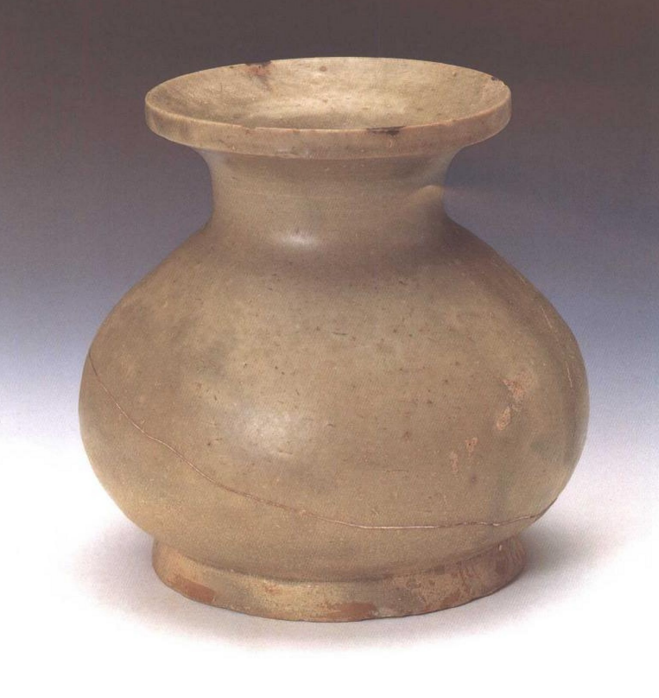
Celadon Spittoon with Polychrome Decoration
351 AD
Year 7 of the Yonghe era
Shuangqin, Wenzhou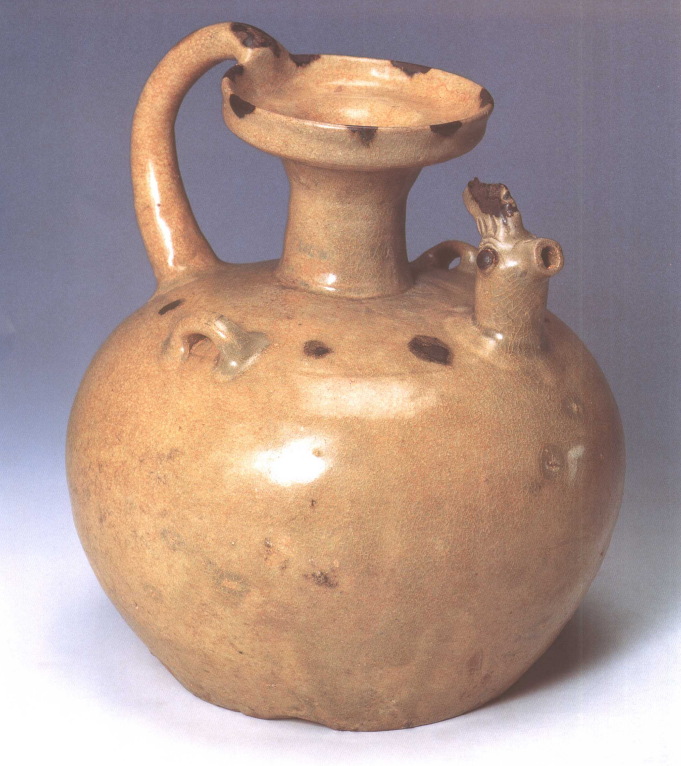
Ouyang Kiln Celadon Brown-Glazed Chicken-Spouted Jar
351 AD
Year 7 of the Yonghe Era
Shuangyu Umbrella Temple, Wenzhou City
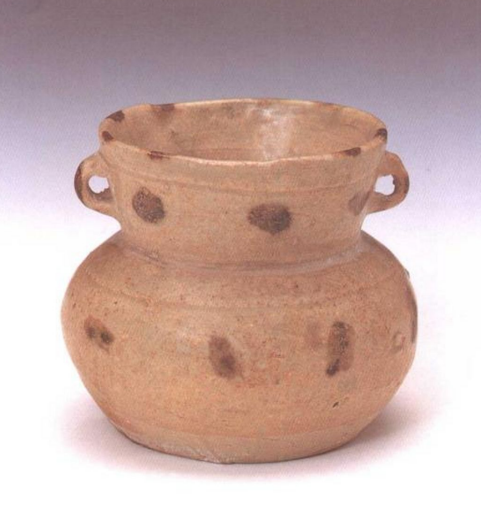
Ouyang Kiln Celadon Vase with Applied Decoration
351 AD
The Seventh Year of the Yonghe Era
Shen County, Zhejiang
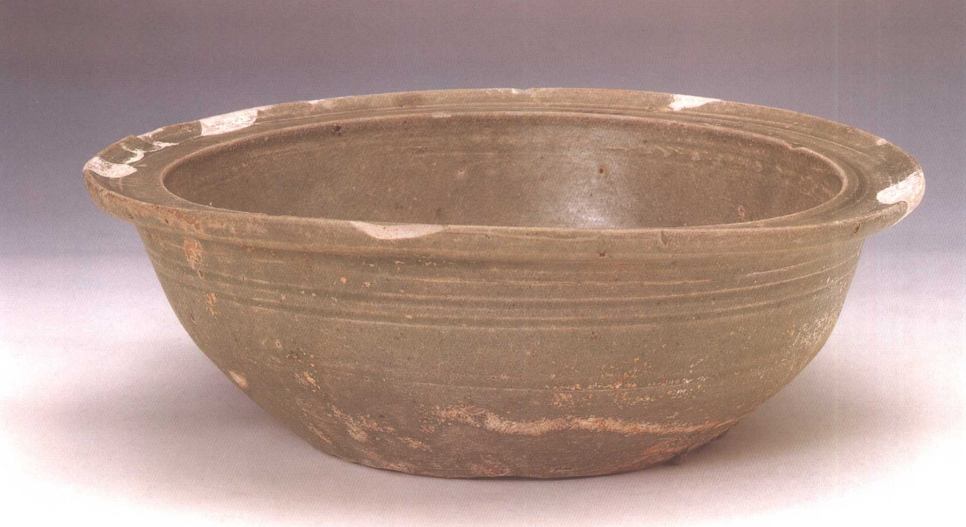
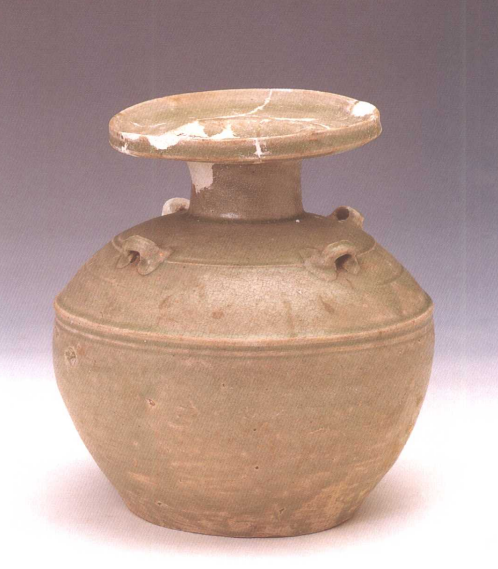
Yue Kiln Celadon Four-Handled Bowl-Mouthed Jar
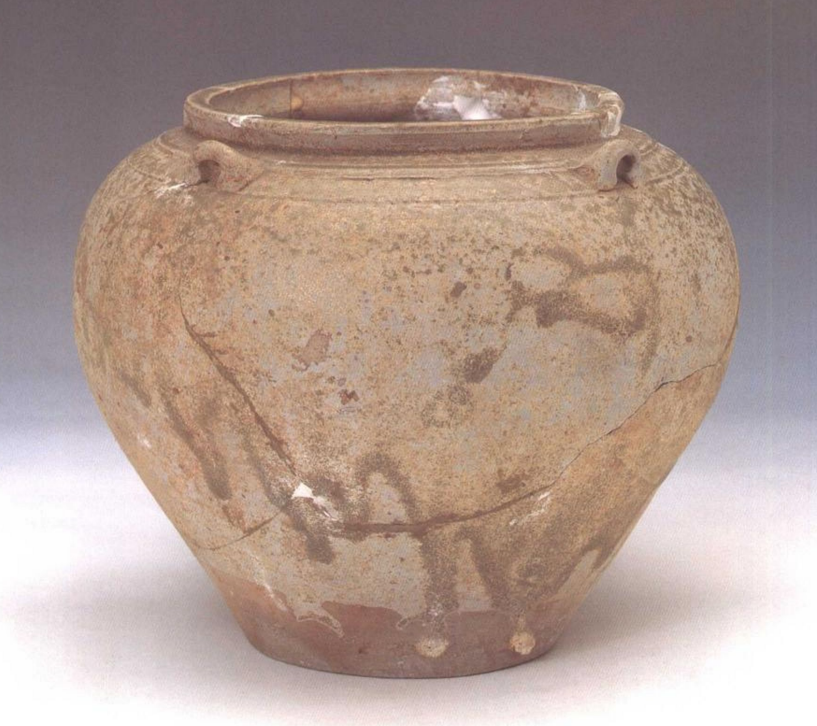
Yue Kiln Celadon Jar with Four Handles
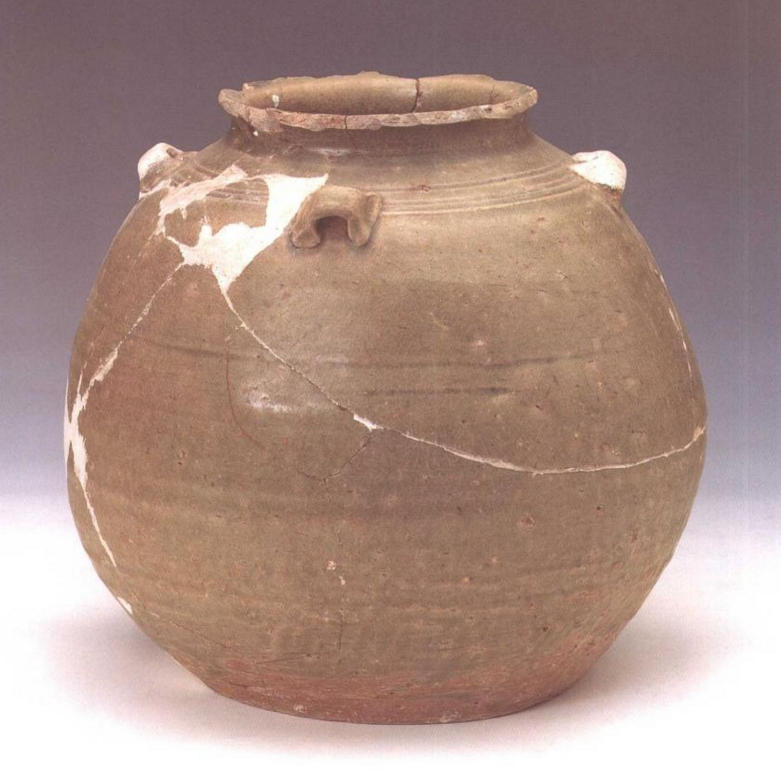
Yue Kiln Celadon Jar with Four Handles
354 AD
The 10th year of the Yonghe era
Jiaoshan Mountain, Yongjia County
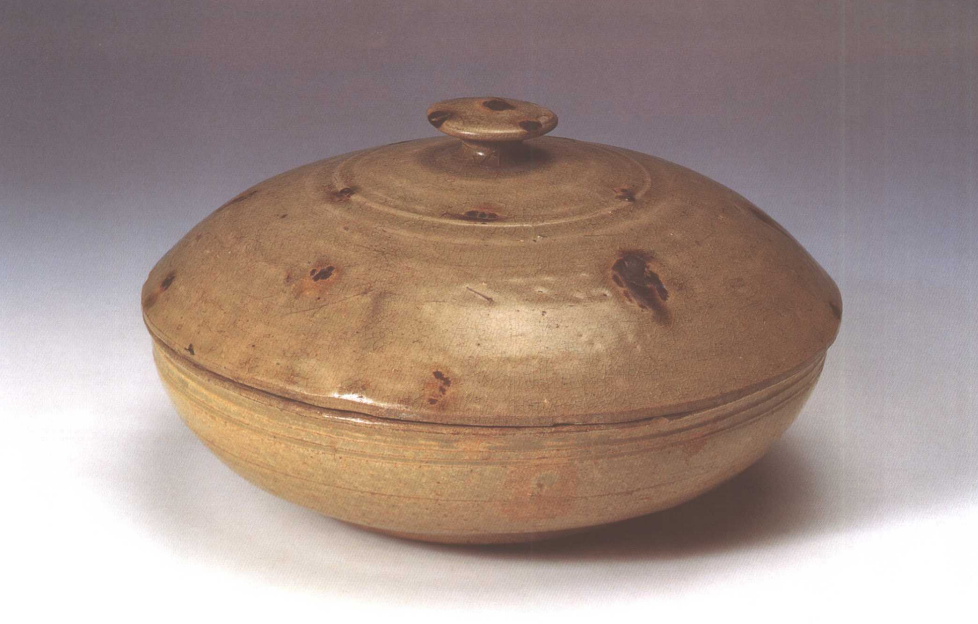
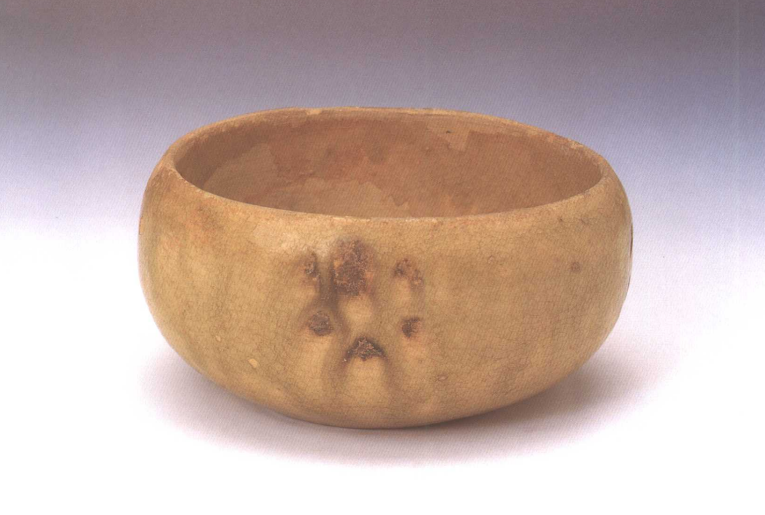
Ouyang Kiln Celadon Bowl with Applied Decoration
355 AD
The 11th year of the Yonghe era
Paitou Town, Zhuji, Zhejiang
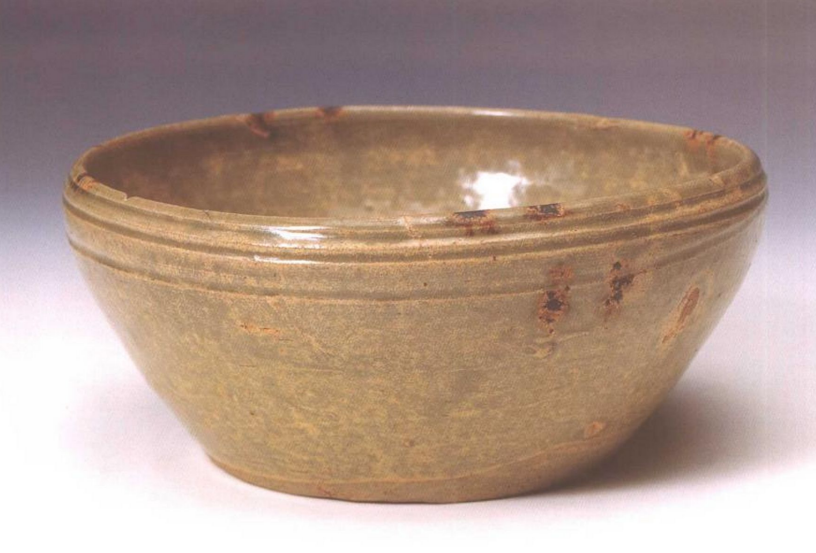
Yue Kiln Celadon Bowl with Applied Decoration
357 AD
Year 1 of the Shengping Era
Rui'an City
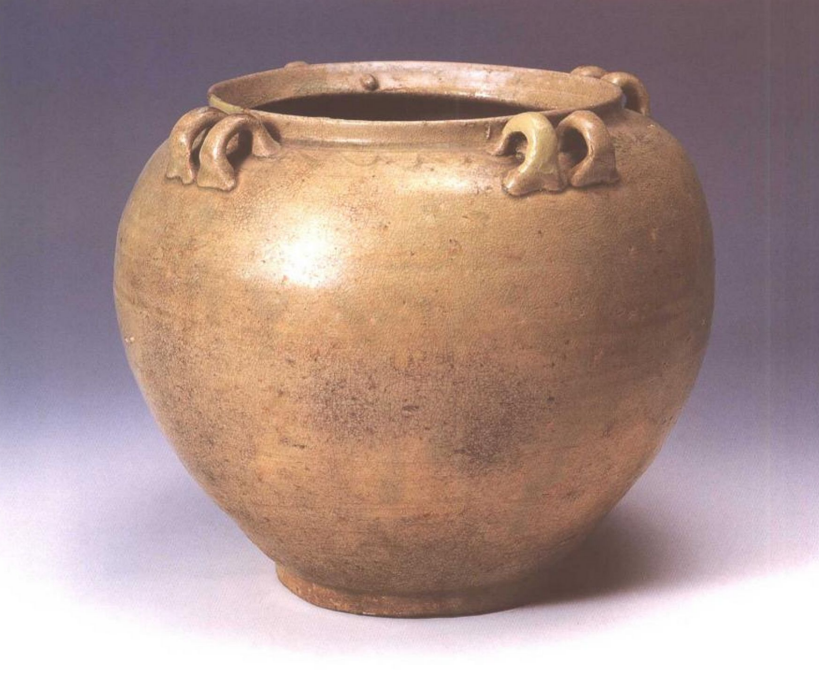
Ouyang Kiln Celadon Four-Handled Jar
359 AD
Year 3 of the Shengping Era
Shuangyu Temple of the Rain Umbrella, Ruizhou City
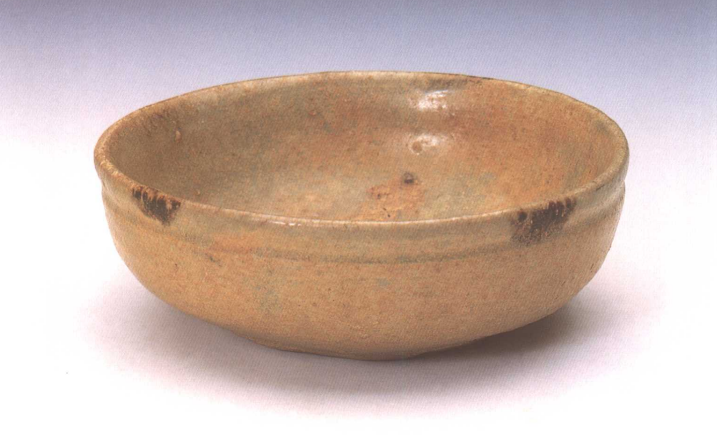
Ouyang Kiln Celadon Bowl with Applied Decoration
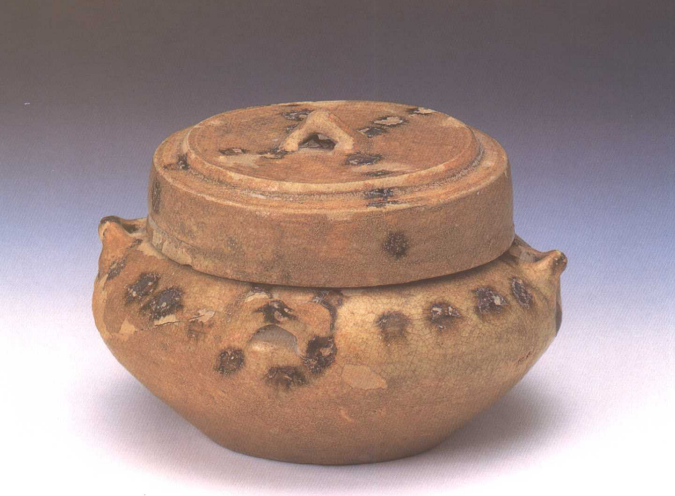
Ouyang Kiln Celadon Spotted-Decorated Lidded Jar
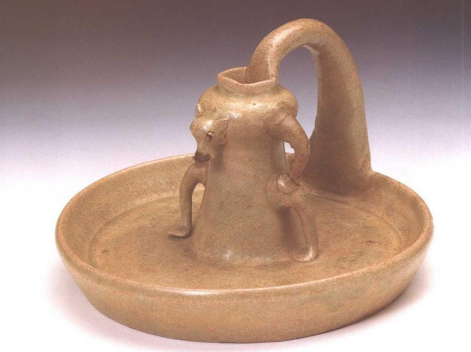
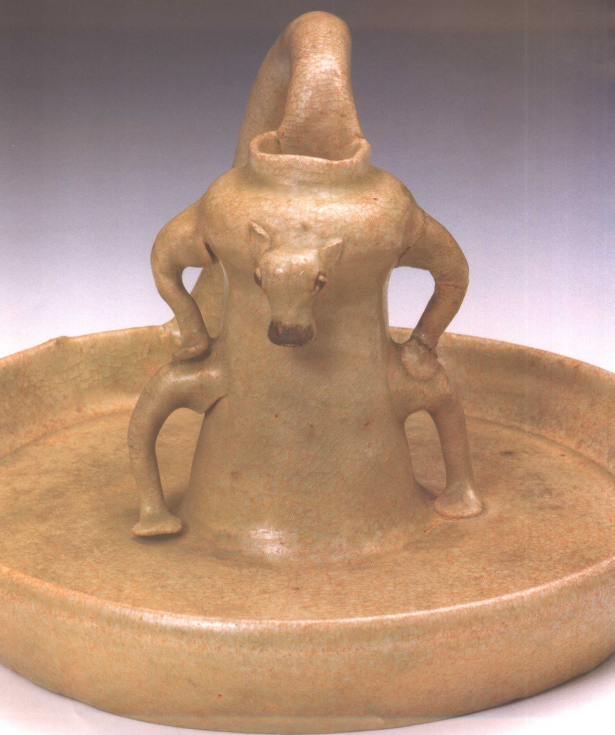
Ouyang Kiln Celadon Spotted Cow-Shaped Lamp
361 AD
The Fifth Year of the Shengping Era
Paitou Town, Zhuji, Zhejiang
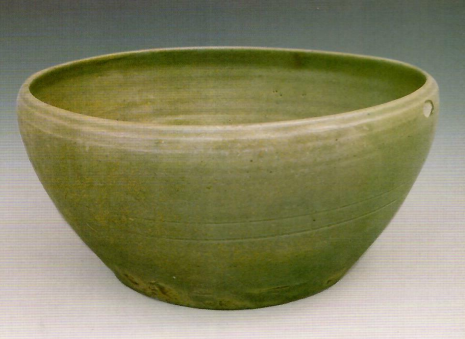
Celadon Bowl with String-Pattern Decoration
364 AD
Second Year of Xingning
Laohe Mountain, Hangzhou, Zhejiang
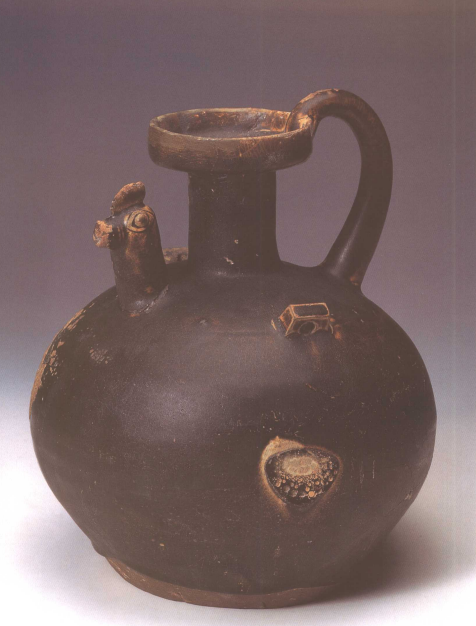
Deqing Kiln Black-Glazed Hen-Head Teapot
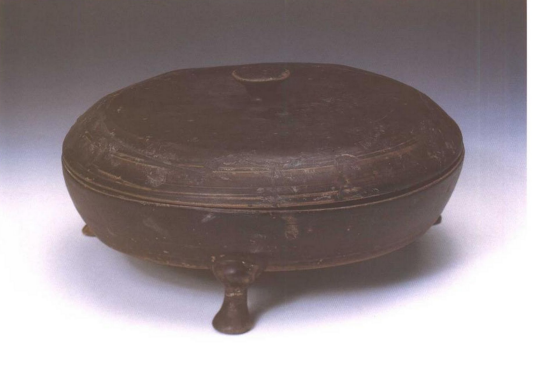
Deqing Kiln Black-Glazed Tripod Box
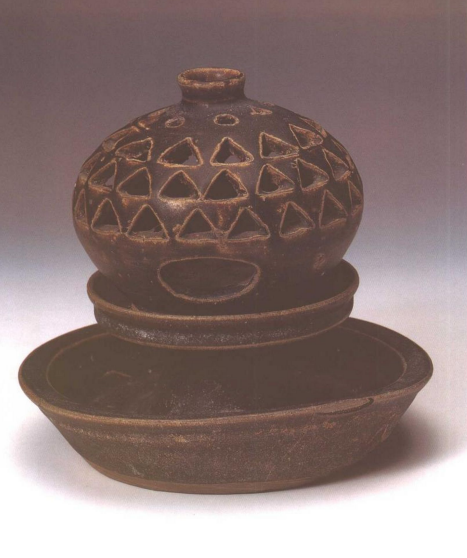
Deqing Kiln Black-Glazed Incense Burner
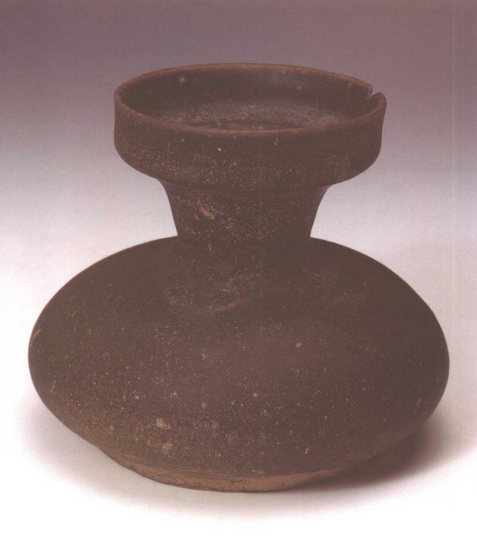
Deqing Kiln Black-Glazed Spittoon
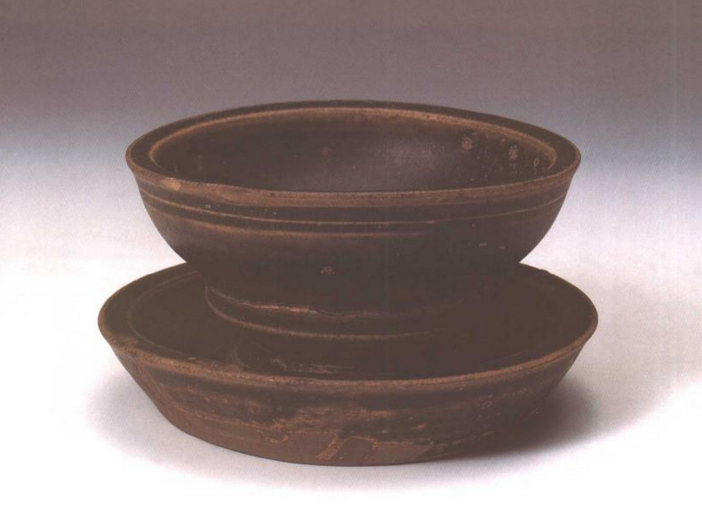
Deqing Kiln Black-Glazed Cup Stand
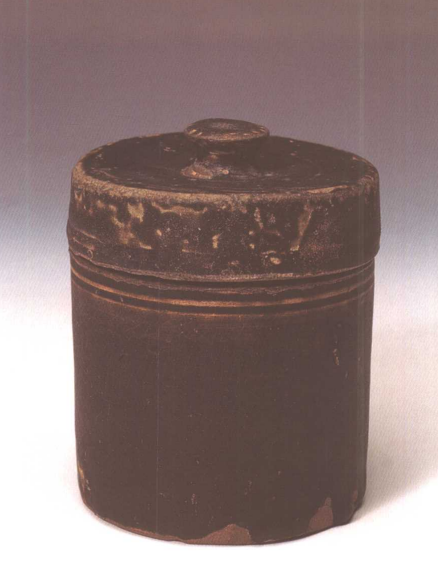
Deqing Kiln Black-Glazed Small Lidded Jar
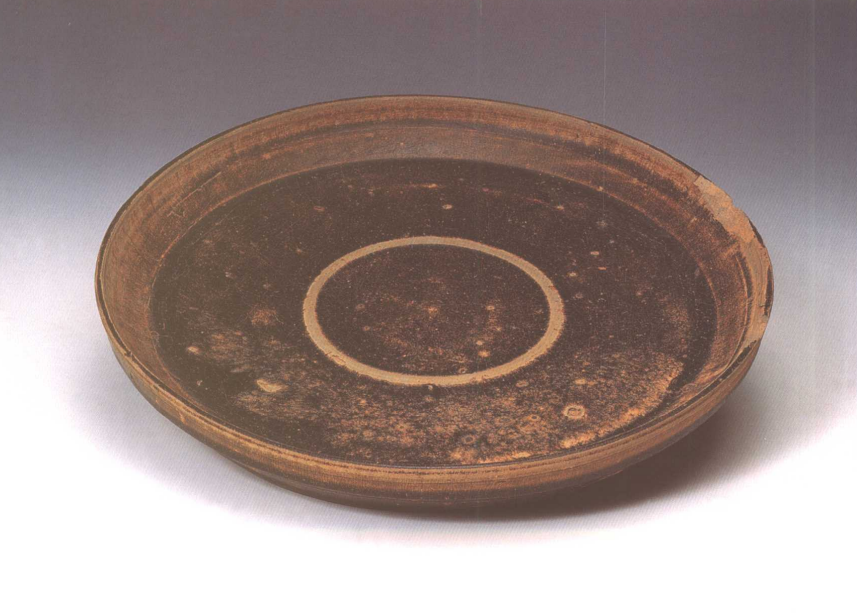
Deqing Kiln Black-Glazed Plate
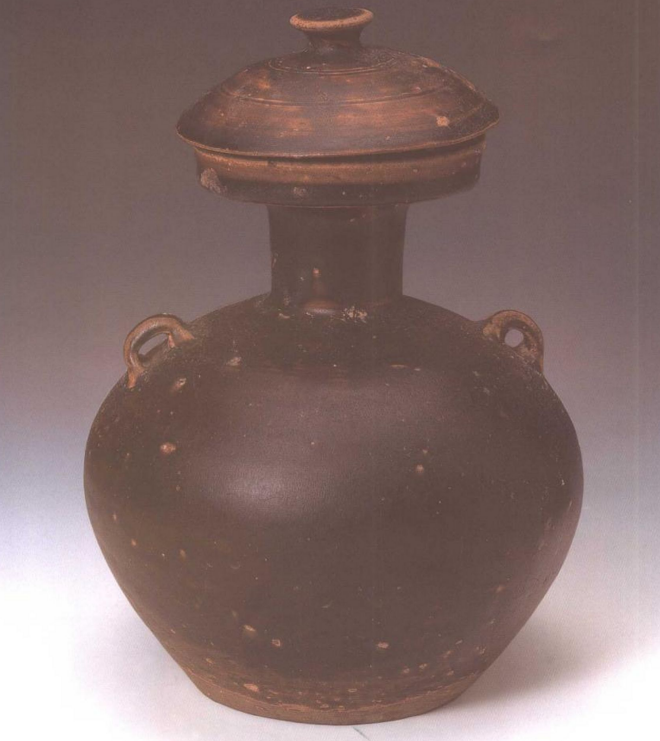
Deqing Kiln Black-Glazed Double-Handled Covered Pot
368 AD
Third Year of the Taihe Era
Tongxi Reservoir, Ruian, Zhejiang
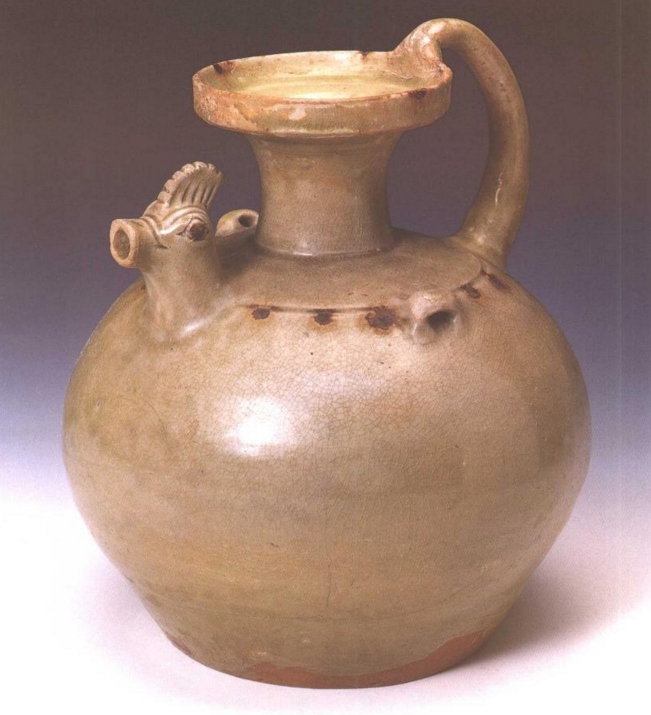
Ouyang Kiln Celadon Dotted-Decorated Rooster-Spouted Jar
368 AD
Third Year of the Taihe Era
Chengguan Town, Shengzhou, Zhejiang
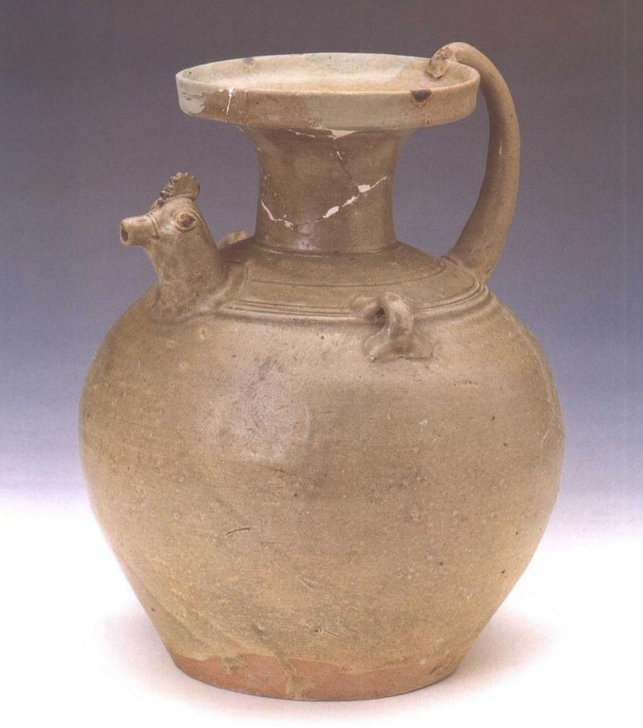
Yue Kiln Celadon Chicken-Head Spouted Vessel
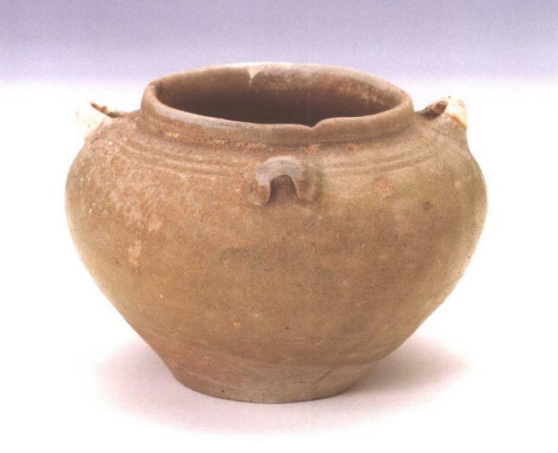
Yue Kiln Celadon Small Jar with Four Handles
375 AD
The Third Year of the Ningkang Era
Taipingling, Wenzhou City
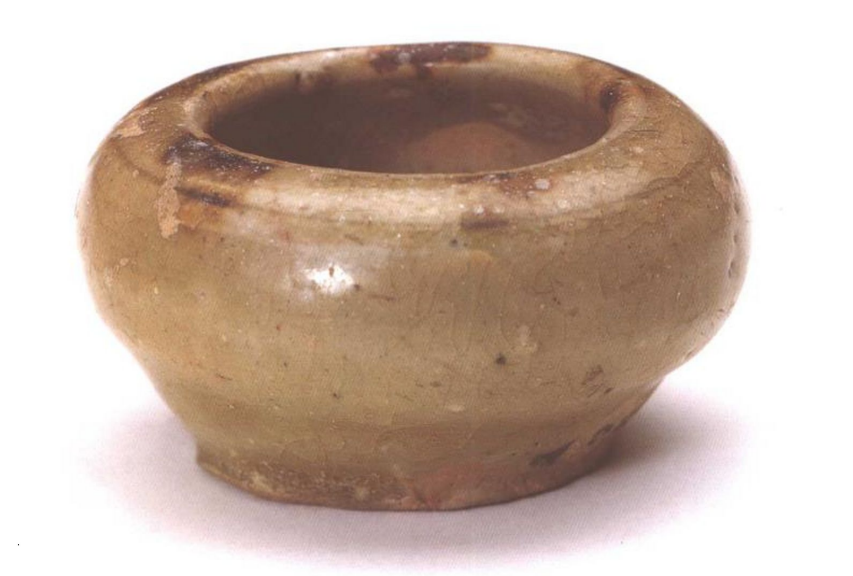
Ouyang Kiln Celadon Dotted-Decorated Water Vessel
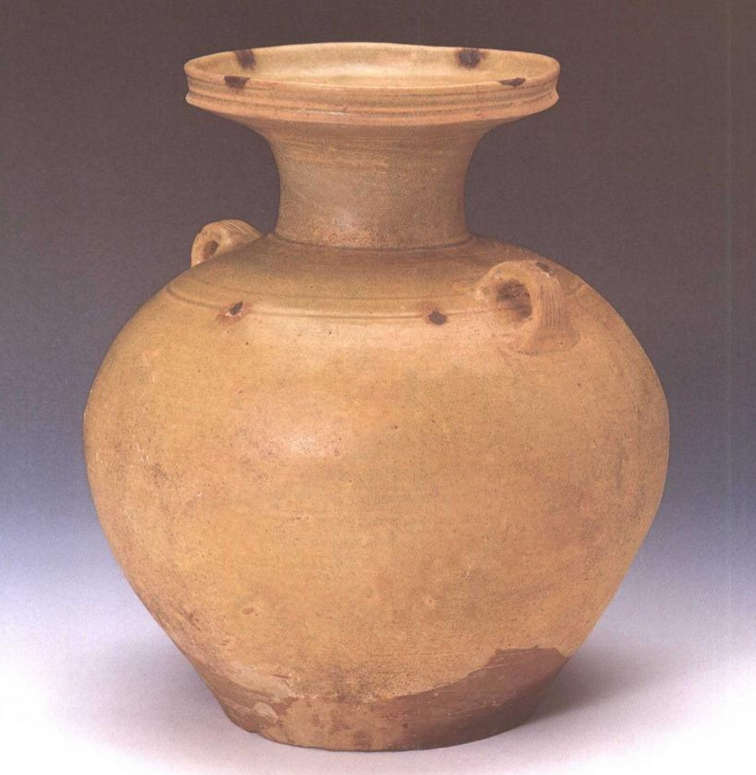
Ouyang Kiln Celadon Spotted-Decorated Double-Handled Bowl-Mouthed Jar
379 AD
The Fourth Year of the Taiyuan Era
Taipingling, Wenzhou City
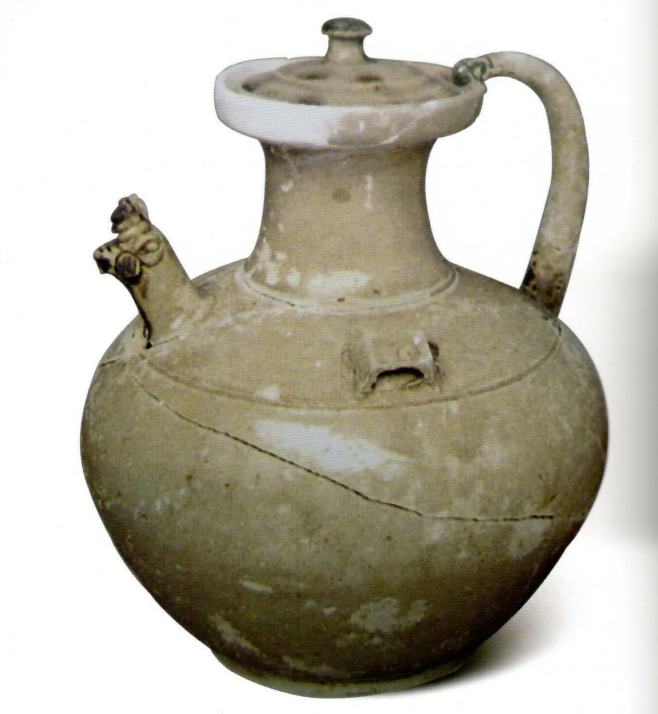
Celadon Chicken-Head Spouted Vessel
379 AD
Fourth Year of the Taiyuan Era
Yuhuatai, Nanjing, Jiangsu
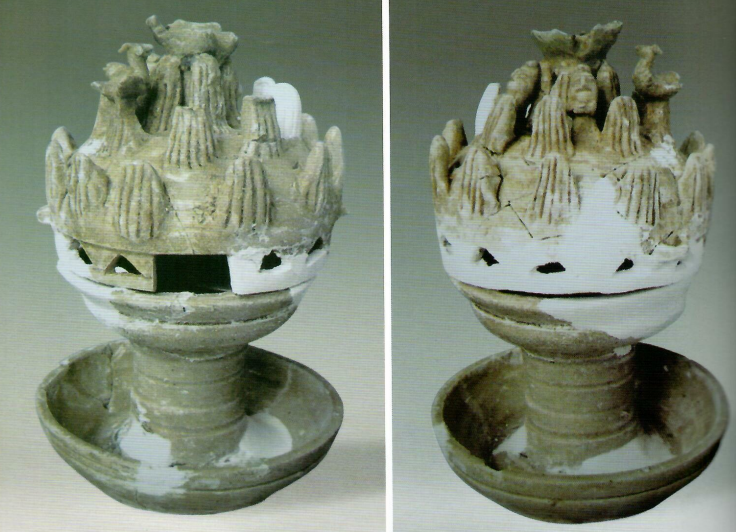
Celadon Incense Burner
385 AD
Tenth Year of the Taiyuan Era
Lianhua Temple, Xinchang County
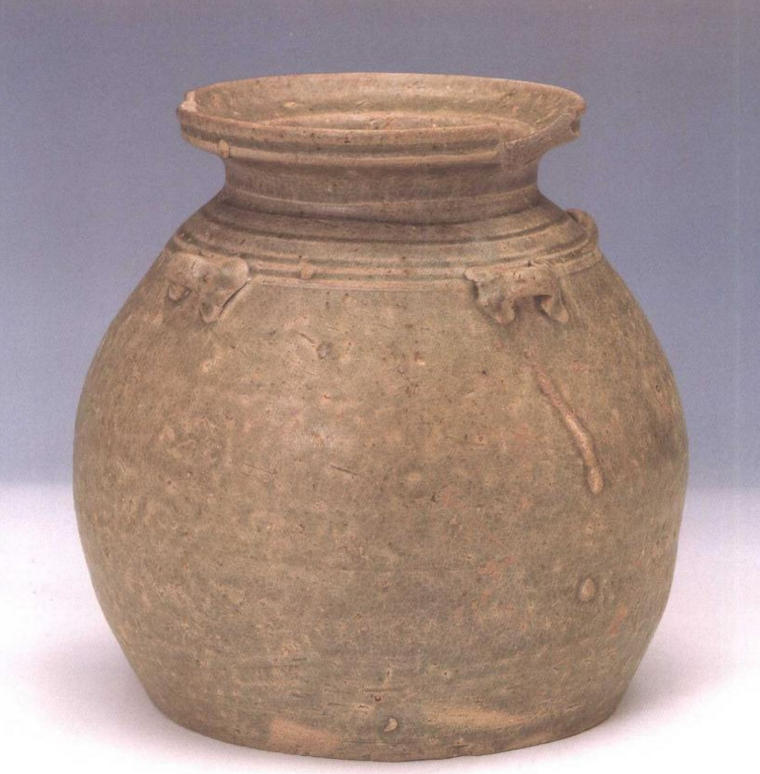
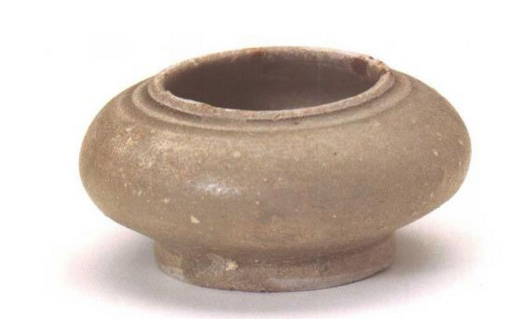
Yue Kiln Celadon Urinal
387 AD
Twelfth Year of the Taiyuan Era
Shangshanggen, Ruian City
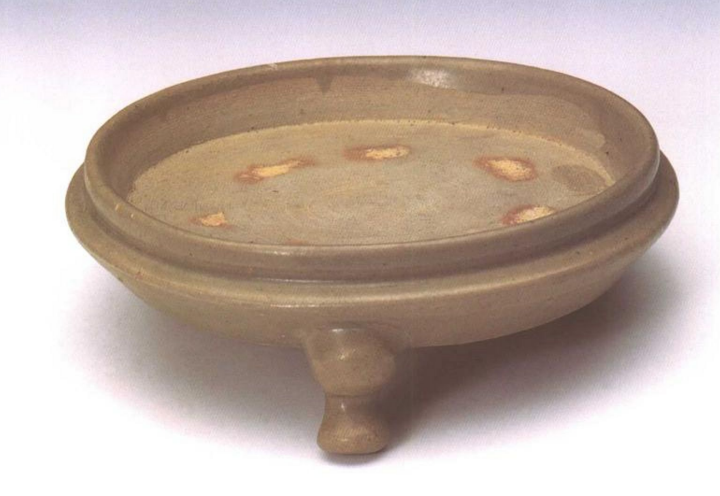
Ouyao Celadon Inkstone
391 AD
Sixteenth Year of the Taiyuan Era
Yao Tou Shan, Cixi, Zhejiang
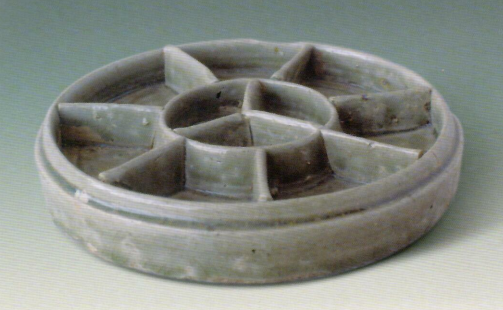
Serving tray
393 AD
The 18th Year of the Taiyuan Era, Eastern Jin Dynasty
Dazhendi, Xinchang County
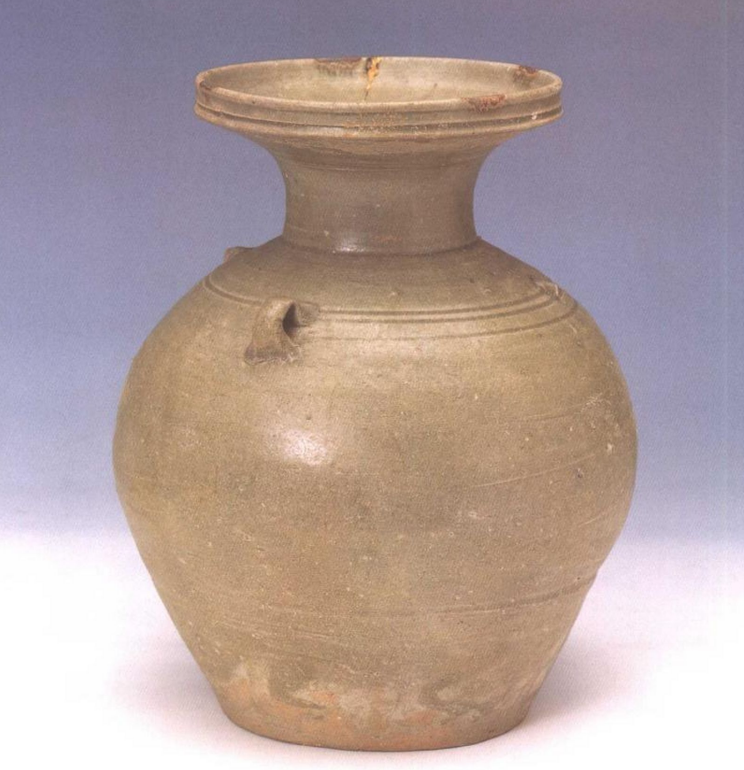
Yue Kiln Celadon Bowl-Mouthed Jar
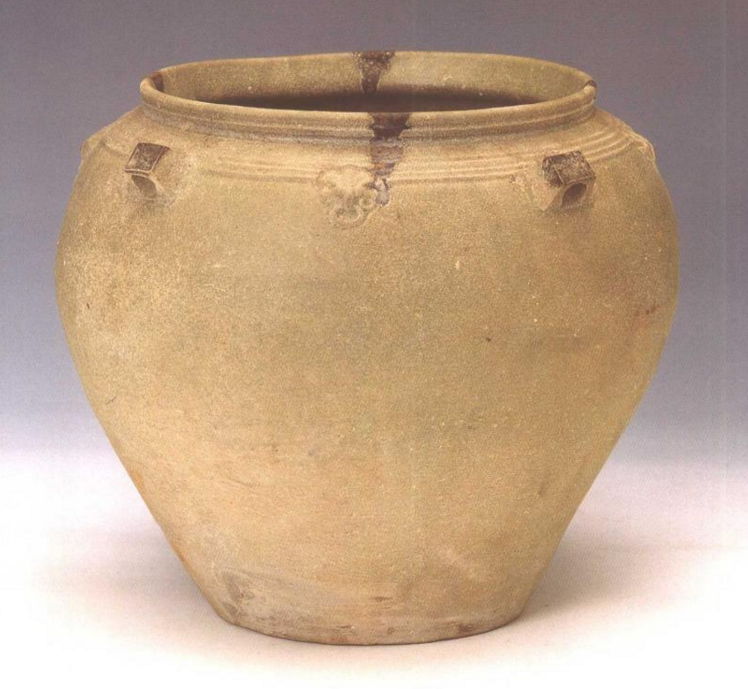
Yue Kiln Celadon Jar with Four Handles
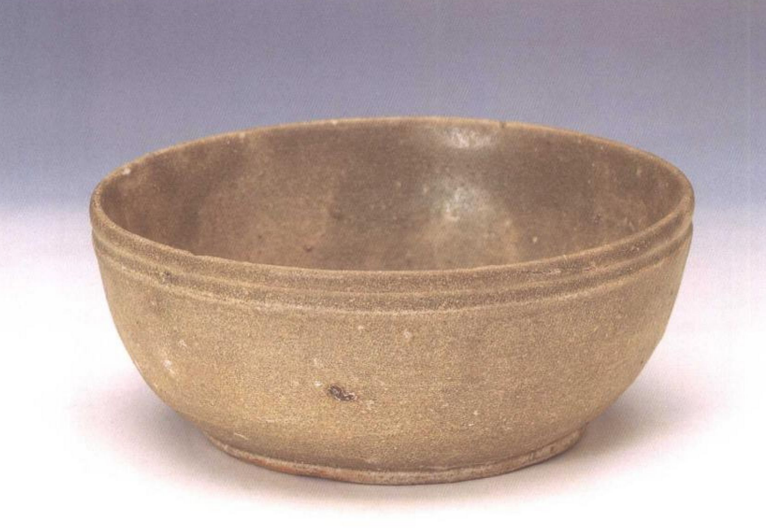
Yue Kiln Celadon Bowl
Yue Kiln Porcelain of China by Lin Shimin and Lin Hao
Ningbo Publishing House
Commemorative Porcelain of Zhejiang by Zhejiang Provincial Museum
Cultural Relics Publishing House


